
 Português
How do new energy high-pressure cleaning vehicles reduce urban noise pollution?
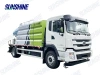
New energy high-pressure cleaning vehicles, through their electric drive systems, play a significant role in reducing urban noise pollution. Noise pollution is a significant issue in modern cities, especially in high-density residential, commercial, and office areas, where it significantly impacts people's quality of life and health. Compared to traditional fuel-powered high-pressure cleaning vehicles, new energy high-pressure cleaning vehicles offer the following advantages:
1. Electric drive system, significantly reduced noise
Traditional fuel-powered high-pressure cleaning vehicles use internal combustion engines (such as diesel engines), which generate considerable noise during operation, especially during acceleration or under heavy workloads. Furthermore, components such as the exhaust system, cooling system, and transmission also generate a certain amount of mechanical noise.
New energy high-pressure cleaning vehicles use electric motors, which generate virtually no mechanical noise, significantly reducing vehicle noise during operation. This is because electric motors operate in a completely different way from internal combustion engines, generating virtually no friction and resulting in smoother operation.
2. Reduced high-frequency noise
Fuel-powered high-pressure cleaning vehicles generate not only low-frequency noise but also strong high-frequency noise, especially at high engine speeds. This noise can be disruptive to hearing. Because electric high-pressure washers use electric motors, they reduce these high-frequency noises, resulting in softer and quieter noise levels for drivers and surrounding residents.
3. Quiet Performance During Cleaning Operations
The water pump and spray system of electric high-pressure washers are also relatively quiet during high-pressure cleaning operations. While high-pressure water jets inherently generate some water flow noise, electric systems are quieter than fuel-powered systems, reducing the overall noise level.
This low-noise characteristic is particularly suitable for areas with strict noise controls, such as city centers, residential areas, and commercial districts, where noise from traditional fuel-powered vehicles is often a major source of complaints.
4. Reduced Low-Frequency Vibration During Cleaning Operations
The operation of traditional fuel-powered vehicle engines is accompanied by strong low-frequency vibrations, which not only increase noise but can also affect road and building structures.
The reduced vibration of electric high-pressure washers means that during the cleaning process, the contact and friction between the vehicle body and the ground does not generate the excessive noise and vibration that occurs with traditional vehicles, helping to reduce low-frequency noise pollution.
5. Suitable for Nighttime or Early Morning Operations
Due to their low noise levels, electric high-pressure washers are well-suited for urban cleaning at night or early morning. Many cities need cleaning during these times, but the noise from traditional fuel-powered vehicles often becomes a nuisance.
Electric cleaning vehicles can maintain efficient cleaning while avoiding disruptions to residents during morning and evening cleaning operations. This is crucial for improving resident satisfaction and reducing complaints.
6. Improving Citizens' Quality of Life
Urban noise pollution is often closely linked to residents' health and well-being. Prolonged exposure to noise can lead to insomnia, anxiety, increased stress, and even hearing loss. By using new energy high-pressure cleaning vehicles, cities can maintain a clean urban environment without increasing noise pollution.
For residents living near busy streets, electric high-pressure cleaning vehicles can significantly enhance their living experience, reduce noise disturbances, and thus improve the city's livability.
7. Supporting Green City Concepts
Noise pollution is a significant aspect of urban pollution. More and more cities are recognizing the role of low-noise cleaning vehicles in creating green, low-carbon, and livable cities. As part of green cleaning equipment, new energy high-pressure cleaning vehicles are helping cities move towards a more environmentally friendly and quieter environment.
Using these low-noise electric cleaning vehicles aligns with the trend toward green transportation and environmental protection, driving cities towards a higher quality of living. Summary:
New energy high-pressure cleaning vehicles significantly reduce noise pollution during cleaning operations through their electric drive systems. Not only do they reduce emissions and noise associated with traditional fuel-powered vehicles, but they also improve the quality of life for residents, especially in noise-sensitive areas. As more and more cities promote low-carbon and livable environments, new energy high-pressure cleaning vehicles will play an increasingly important role in urban cleaning and environmental protection.
Related News



Contact US
Product Information
Quantity
Unit
Piece
Support order samples, customization, wholesale direct, and complete payment. If the product you look for does not have corresponding customized content, pls fill out the form below to contact us, and we will reply ASAP.