
 Português
From traditional fuel vehicles to new energy high-pressure cleaning vehicles, what changes will urban cleaning work usher in?
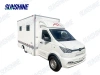
The transition from traditional fuel-powered vehicles to new energy high-pressure cleaning vehicles signals a profound transformation in multiple aspects of urban cleaning.This impacts not only environmental protection and operational efficiency,but also technological innovation,cost control,and social responsibility.The following are the key changes:
1.Environmental Protection and Sustainable Development
Reduced Carbon Emissions:Traditional fuel-powered high-pressure cleaning vehicles rely on diesel or gasoline,producing significant amounts of greenhouse gases and harmful gases(such as carbon dioxide and nitrogen oxides).New energy high-pressure cleaning vehicles,powered by electricity,produce virtually zero emissions,significantly reducing their carbon footprint and making a positive contribution to urban air quality and environmental protection.
Reduced Noise Pollution:Traditional fuel-powered vehicles generate significant noise from their engines and exhaust systems,which can impact residents'quality of life during urban cleaning operations,especially during early morning or evening operations.New energy high-pressure cleaning vehicles,due to their electric drive,are extremely quiet,allowing them to operate at more flexible times(such as at night or early morning)without disturbing residents.
Water Conservation:New energy high-pressure cleaning vehicles are equipped with water recycling and recovery systems to minimize water waste.This is a significant advantage over traditional cleaning vehicles,especially in cities with limited water resources,where water recycling and reuse are crucial for ecological protection.
2.Improved Cleaning Efficiency and Quality
Precise Cleaning Capabilities:New energy high-pressure washing vehicles utilize an intelligent control system that automatically adjusts the water flow and pressure based on road conditions and contamination levels,achieving efficient and precise cleaning results.In contrast,traditional fuel-powered vehicles often require manual adjustments,which introduces uncertainty and inefficiencies.
Fewer Washes:Thanks to their high-pressure water jets and efficient cleaning capabilities,new energy high-pressure washing vehicles can quickly remove stubborn stains,reducing the frequency and time of cleaning,thereby improving efficiency.
Integrated Multi-Functionality:New energy high-pressure washing vehicles often incorporate not only cleaning functions but also vacuuming and garbage collection.This allows urban cleaning operations to utilize a single vehicle for multiple purposes,improving overall efficiency and cleaning results.
3.Reduced Operating Costs and Improved Economic Efficiency
Energy Cost Savings:Compared to traditional fuel-powered washing vehicles,new energy high-pressure washing vehicles typically have lower electricity costs than fuel,making long-term operating costs more economical,especially in cities with reasonable electricity prices.With advances in battery technology,charging costs for electric high-pressure washing vehicles will continue to decrease.Low Maintenance Costs:The electric systems of new energy high-pressure cleaning vehicles are simpler than traditional fuel-powered engines,requiring less maintenance and significantly reducing repair costs.The structure of electric motors is less complex than that of traditional engines,resulting in relatively low maintenance frequency and costs over long-term use.
Extended Service Life:The battery and power system designs of electric high-pressure cleaning vehicles are maturing,and battery life and charging convenience are continuously being optimized.This helps extend the service life of the vehicles,thereby generating long-term economic benefits.
4.Intelligent and Digital Management
Intelligent Scheduling and Monitoring:New energy high-pressure cleaning vehicles are equipped with advanced GPS positioning and intelligent monitoring systems,providing real-time monitoring of vehicle location,operating status,energy consumption,cleaning performance,and other information.City management departments can conduct remote scheduling and supervision through digital platforms,improving resource allocation efficiency.
Data-Driven Decision Support:Real-time data from cleaning vehicles helps management departments evaluate cleaning performance and adjust cleaning plans.This data-driven management approach improves decision-making accuracy,reduces human intervention,and optimizes the overall city cleaning process.
Automated Operations:Some new energy high-pressure cleaning vehicles are beginning to experiment with autonomous or semi-autonomous operation,reducing labor costs and further improving efficiency.This intelligent advancement also opens up more possibilities for future urban cleaning operations.5.Enhance Social Image and Corporate Responsibility
Promoting Green City Construction:Urban management departments'adoption of new energy high-pressure cleaning vehicles not only improves operational efficiency but also promotes the city's green transformation.As urban cleaning operations gradually become low-carbon and environmentally friendly,citizens'living environment will also be greatly improved.
Enhancing Corporate Image:For cleaning companies or municipal service providers,adopting new energy cleaning vehicles helps enhance their green image in the eyes of society and customers,demonstrates their commitment to social responsibility,and enhances brand competitiveness and public recognition.
6.Adapting to Future Urban Needs and Urban Development
Adapting to Urbanization:As urban populations continue to grow,the demand for cleaning urban streets and public spaces is also increasing.New energy high-pressure cleaning vehicles,with their high efficiency and energy-saving features,can effectively meet large-scale urban cleaning needs,especially in densely populated and heavily polluted urban areas.They are better suited to the challenges of future urban cleaning.
Smart Cities and Environmental Management:In the construction of future smart cities,new energy high-pressure cleaning vehicles will be integrated with other smart devices,leveraging the Internet of Things and big data to achieve more intelligent and refined urban management.For example,cleaning vehicles can be connected to smart trash cans,smart streetlights,and other devices to enable data sharing and intelligent scheduling,thereby improving overall urban management.
7.Promoting Technological Innovation in the Cleaning Industry
Spurring Technological Innovation:The widespread adoption of new energy high-pressure cleaning vehicles is driving technological innovation in cleaning equipment,from intelligent cleaning to energy efficiency optimization,raising the technical level of the entire industry.This will also encourage further innovation in other related fields,including cleaning equipment,energy management,and automation.
Driving the Green Industrial Chain:With the increasing demand for new energy high-pressure cleaning vehicles,related industrial chains such as battery technology,charging infrastructure,and intelligent control systems will also usher in development opportunities.This will drive the overall development of the green industry and promote a more sustainable society.
Summary:From traditional fuel vehicles to new energy high-pressure cleaning vehicles,urban cleaning will undergo a comprehensive green transformation.This transformation is not only driven by environmental protection and energy conservation,but also represents an inevitable trend towards efficient,intelligent,and sustainable urban management.New energy high-pressure cleaning vehicles will bring revolutionary changes in cleaning performance,operating costs,environmental protection,and technological innovation,driving future urban cleaning to become more efficient,green,and intelligent.
Related News


Contact US
Product Information
Quantity
Unit
Piece
Support order samples, customization, wholesale direct, and complete payment. If the product you look for does not have corresponding customized content, pls fill out the form below to contact us, and we will reply ASAP.