
 Português
How do new energy high-pressure cleaning vehicles address the problem of water waste in urban road cleaning?
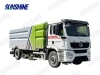
New energy high-pressure cleaning vehicles address the problem of water waste in urban road cleaning through a combination of innovative technologies and sustainable practices that optimize water usage,reduce waste,and increase the overall efficiency of the cleaning process.Here's how these vehicles effectively tackle water waste issues:
1.Water Recycling Systems
Integrated water recovery systems allow new energy high-pressure cleaning vehicles to collect,filter,and reuse water during cleaning.This significantly reduces the amount of fresh water required for street cleaning.
The system works by using the vacuum suction function to collect wastewater from the road surface,filtering out debris and contaminants before it is reused for cleaning.
By recirculating water in this manner,the vehicle can clean larger areas without the need to continually replenish water,resulting in substantial water conservation and reduced overall consumption.
2.On-demand Water Flow
Smart water management systems in these vehicles enable on-demand water flow,meaning that water is only sprayed when needed.Traditional high-pressure cleaning vehicles might release water continuously,regardless of whether it's necessary or not.
The on-demand system adjusts the flow rate based on the surface being cleaned,optimizing water usage.For example,the system may reduce the amount of water used when cleaning less dirty areas and increase flow for tougher stains or heavily soiled regions.
This precise control helps avoid water waste,ensuring that only the necessary amount of water is used for effective cleaning.
3.High-Efficiency Nozzles and Pressure Control
High-efficiency nozzles are designed to deliver strong pressure with minimal water usage.These nozzles maximize the cleaning effect by focusing water in concentrated beams,thus reducing the total volume of water required for the task.
The pressure control systems in new energy high-pressure cleaning vehicles ensure that optimal pressure is applied to the surface,which not only enhances cleaning efficiency but also minimizes water runoff and waste.
4.Adaptive Water Usage Based on Environmental Conditions
Some modern electric high-pressure cleaning vehicles come equipped with sensor-based technologies that detect the environmental conditions of the roads.These sensors can measure factors such as road surface material,contamination level,and even weather conditions like rain.
Based on these readings,the vehicle’s system adjusts water usage dynamically,ensuring that it uses just enough water for effective cleaning without oversaturating the surface.This is particularly useful in urban settings where the types of roads and pollution levels can vary greatly.
5.Low Water Consumption with High Cleaning Power
Advanced cleaning technologies allow new energy high-pressure cleaning vehicles to deliver high cleaning power while using less water.These systems employ advanced pumps and motors that generate high-pressure water jets,which require less water but still provide the cleaning force necessary to remove dirt and stains from the road surface.
For instance,high-pressure systems can clean effectively using as little as 30-50%of the water that would be needed in traditional cleaning methods,significantly cutting down on water consumption.
6.Environmental Monitoring and Smart Feedback Loops
Some new energy vehicles are integrated into smart city systems,which allow for real-time monitoring of the vehicle's operations.This data can include water usage,battery levels,and cleaning performance.
Using this data,operators can ensure that water usage is consistently optimized,and adjustments can be made during the cleaning process to prevent waste.In some cases,the system might provide feedback to operators if water usage is higher than expected,helping to identify and correct inefficiencies quickly.
7.Multi-Functional Design
Many new energy high-pressure cleaning vehicles are designed to perform multiple tasks(e.g.,cleaning,sweeping,and vacuuming)in one pass,reducing the need for additional water-intensive operations like manual sweeping or washing.This integration of functions helps reduce both water usage and the time spent on cleaning operations.
The vehicle can also sweep debris into a collection bin,ensuring that the water used for cleaning stays focused on the road surface,rather than being wasted on debris removal.
8.Sustainability and Green Certification
In line with broader sustainability goals,new energy high-pressure cleaning vehicles are increasingly certified for eco-friendliness.Their water-saving features contribute to their environmental benefits,aligning with global efforts to reduce water waste,promote water conservation,and minimize the ecological impact of urban cleaning activities.
Many cities are adopting water-efficient technologies as part of their green infrastructure initiatives,and using vehicles that incorporate these technologies supports their commitment to sustainability.
9.Educational and Public Awareness Impact
As cities adopt new energy high-pressure cleaning vehicles,they also provide an opportunity for raising public awareness about the importance of water conservation.Urban residents are increasingly becoming aware of the need for sustainable practices in daily operations,and such vehicles are a visible sign of cities taking proactive steps to reduce water waste in public services.
Summary of Key Water-Saving Features:
Water recycling systems that recover and reuse water during cleaning.
On-demand water flow that adapts to cleaning needs,reducing excess water usage.
High-efficiency nozzles and pressure control systems that maximize cleaning while minimizing water use.
Adaptive systems that adjust water consumption based on environmental and road conditions.
Low water consumption combined with high cleaning power,reducing waste.
Real-time monitoring and smart feedback loops to optimize water usage during operations.
Multi-functional design that reduces the need for multiple cleaning steps,thereby saving water.
Sustainability certification and green initiatives supporting water conservation.
By integrating these water-saving technologies,new energy high-pressure cleaning vehicles represent a significant advancement in reducing water waste while maintaining effective urban street cleaning.They align with the growing demand for sustainable urban services and contribute to making cities more eco-friendly and resource-efficient.
Related News


Contact US
Product Information
Quantity
Unit
Piece
Support order samples, customization, wholesale direct, and complete payment. If the product you look for does not have corresponding customized content, pls fill out the form below to contact us, and we will reply ASAP.