
 Português
Can new energy sewage suction trucks replace traditional fuel vehicles?
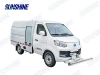
Yes,new energy sewage suction trucks have the potential to replace traditional fuel-powered vehicles,but there are some factors to consider before a full transition.Let’s break this down:
1.Environmental and Operational Suitability:
Zero Emissions:One of the biggest advantages of new energy sewage suction trucks(especially electric ones)is their zero-emissions operation.Traditional fuel vehicles emit CO2 and pollutants like NOx and particulate matter,whereas new energy trucks help reduce urban air pollution and contribute to climate change mitigation.
Noise Pollution:New energy trucks,particularly electric ones,are quieter than their diesel counterparts,making them well-suited for urban areas,especially residential zones where noise pollution is a concern.
Cleaner Operations:The technologies in new energy sewage suction trucks can reduce the environmental footprint of sewage collection,contributing to sustainability goals.
2.Cost and Economic Considerations:
Initial Investment:While the upfront cost of new energy sewage suction trucks may be higher(due to the cost of batteries and advanced technologies),these trucks offer significant savings over time.Lower fuel costs(electricity vs.diesel),fewer maintenance requirements(electric motors have fewer moving parts),and longer lifespans can make them economically viable in the long run.
Government Incentives:Many countries and regions offer financial incentives to encourage the adoption of electric and hybrid vehicles,such as subsidies,tax credits,and rebates.These incentives can help offset the higher initial costs.
Operating Costs:Electric sewage suction trucks tend to have lower operating costs than diesel-powered trucks,particularly in terms of fuel and maintenance.Over time,the lower cost of electricity compared to diesel can result in significant savings.
3.Technical Challenges and Limitations:
Battery Life and Range:One of the main technical limitations of new energy sewage suction trucks(especially electric ones)is their battery range.The large size and weight of sewage suction equipment,combined with the need for sufficient power to pump and vacuum waste,may require larger batteries,which could add weight and affect the truck’s overall range.
Charging Infrastructure:Electric sewage suction trucks require reliable charging infrastructure,especially in cities where trucks need to operate throughout the day.The availability of fast charging stations and the frequency of charging cycles are factors to consider in adoption.Charging downtime during long shifts can also be a challenge.
Heavy-Duty Demands:Sewage suction trucks are heavy-duty vehicles that need high power to handle the suction and transport of waste.This can be demanding on the truck's battery system,potentially requiring larger and more expensive batteries or hybrid power systems.
4.Adoption Timeline and Industry Shift:
Phased Transition:The transition from traditional fuel vehicles to new energy vehicles is likely to be gradual.Many municipalities or companies might adopt hybrid vehicles initially,which combine a traditional engine with an electric motor,offering a balance of range and sustainability.Over time,as technology improves,the shift toward fully electric sewage suction trucks could become more feasible.
Infrastructure Upgrades:Cities may need to invest in charging stations and maintenance facilities to support the adoption of new energy trucks.This is a key factor that will influence how quickly these trucks can replace traditional ones.
5.Performance and Reliability:
Durability:While new energy trucks are still relatively new,the technology has been evolving rapidly.In terms of performance,electric trucks have proven effective for urban applications where the distances traveled aren’t as long,and the trucks are making frequent stops.However,for sewage suction trucks that might need to cover large areas or work long hours without downtime,reliability and battery life could be a concern in the short term.
Adaptability to Different Conditions:Diesel trucks are well-suited for a wide range of challenging conditions.It will be important for new energy trucks to prove their durability under tough conditions,such as in extreme temperatures or on rugged terrain.
6.Environmental Impact and Public Perception:
Public Support:The push for electric vehicles is strong in many regions,driven by environmental concerns.Replacing diesel-powered sewage suction trucks with cleaner alternatives would align well with public sentiment toward green initiatives and sustainability.
Waste Disposal Efficiency:New energy sewage suction trucks,especially those with advanced technologies like improved filtration or eco-friendly waste handling,can have a lower environmental impact in terms of waste disposal,compared to older diesel-powered systems.
Conclusion:
Yes,new energy sewage suction trucks can replace traditional fuel vehicles,but this shift will depend on several factors:
Battery technology and the range of electric trucks must continue to improve to meet the heavy demands of sewage suction.
Charging infrastructure must be expanded,especially in large cities where these trucks operate continuously.
Government support and financial incentives will be essential to offset the higher upfront costs.
Phased adoption of hybrid trucks and gradual transition to full electric models will likely be the most practical approach.
In the long run,the environmental and economic benefits make new energy sewage suction trucks a compelling alternative to traditional diesel-powered vehicles.As technology advances and adoption increases,these trucks will likely become a mainstream solution in urban waste management.
Related News



Contact US
Product Information
Quantity
Unit
Piece
Support order samples, customization, wholesale direct, and complete payment. If the product you look for does not have corresponding customized content, pls fill out the form below to contact us, and we will reply ASAP.