
 Português


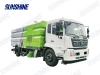
With growing environmental awareness and the continuous development of clean energy technologies, new energy road sweepers have become a significant innovation in urban cleaning operations. Unlike traditional fuel-powered sweepers, these vehicles utilize electricity or other renewable energy sources, resulting in improved environmental friendliness, high efficiency, and low noise levels. They are widely used for daily cleaning operations in urban areas, including streets, plazas, airports, and parking lots.
▲Operating Principle
New energy road sweepers operate similarly to traditional road sweepers, primarily using a high-pressure water pump, sweeping brushes, and vacuum systems to remove debris from the road surface. However, new energy road sweepers utilize new energy systems such as batteries, electric motors, or hydrogen fuel cells, replacing traditional fuel engines and reducing carbon emissions and noise pollution.
Electric Drive System: New energy road sweepers are typically powered by a highly efficient electric motor. This drive system is independent of fossil fuels, thus reducing carbon dioxide emissions and air pollution.
High-Pressure Water Washing System: The onboard high-pressure water pump sprays water onto the road surface, quickly removing dirt. The sweeper is equipped with a rotating brush head that combines the high-pressure water flow to clean dust, sand, and debris from the road surface. Vacuum and Waste Collection System: The onboard vacuum and trash can effectively collect and store waste generated during the sweeping process. The vacuum system typically uses powerful wind to suck the swept waste into the trash can, preventing secondary contamination.
Advantages of New Energy Road Sweepers
▲Outstanding Environmental Performance
The biggest advantage of new energy road sweepers is their environmental friendliness. Traditional fuel-powered road sweepers rely on diesel or gasoline engines, which not only emit large amounts of harmful gases but also generate noise pollution. New energy road sweepers, on the other hand, replace traditional fuels with electricity, hydrogen, and other energy sources, resulting in zero emissions and low noise levels, meeting the needs of green urban cleaning operations.
▲Energy Saving and Consumption Reduction
Due to the higher energy efficiency of electric motors, new energy road sweepers consume less energy than traditional fuel-powered vehicles. Especially with the continuous advancement of battery technology, the range and charging efficiency of new energy road sweepers are gradually improving, reducing operating costs.
▲Low Noise
Traditional fuel-powered road sweepers generate considerable noise during operation, impacting the public's living environment. New energy road sweepers, on the other hand, use electric drive systems, resulting in lower noise levels, meeting urban environmental noise standards, and are particularly suitable for nighttime sweeping operations.
▲Low Maintenance Costs
Due to the simple structure of their electric systems, new energy road sweepers generally have lower maintenance costs than traditional fuel-powered road sweepers. Electric motors lack the complex mechanical structure of traditional engines, eliminating the need for frequent part replacements and reducing downtime due to engine failure.
▲Rapid Technological Development
With the continuous advancement of new energy technologies, the performance of new energy road sweepers in terms of power, batteries, and control systems continues to improve, resulting in increased endurance, charging speed, and intelligence. Many road sweepers also feature features such as autonomous driving and remote monitoring, further enhancing operational efficiency and safety.
▲Challenges of New Energy Road Sweepers
Despite their numerous advantages, new energy road sweepers also face challenges in their promotion and application:
▲Battery Life and Charging Issues
Despite continuous advancements in battery technology, battery life remains a concern for high-power, high-load road sweepers. Long periods of continuous sweeping may require frequent charging, especially in urban environments with high workloads. Further improvement in charging infrastructure is needed.
▲High Initial Investment
New energy road sweepers require a relatively high initial investment, especially for the research and development of batteries and drive systems. While long-term use can reduce energy costs, this initial investment remains a significant barrier for many companies.
Shortage of Technical and Maintenance Talent
Currently, the adoption of new energy technologies is still evolving, creating a significant demand for specialized technicians and maintenance personnel. Some areas may lack adequate technical support and maintenance service systems, hindering the effectiveness of new energy road sweepers.
▲Conclusion
The emergence of new energy road sweepers not only aligns with the trend of green development but also provides a more efficient and environmentally friendly cleaning method for urban management. With technological advancements and growing market demand, the application prospects of new energy road sweepers are broad, and they will contribute significantly to improving the urban environment in the future.
▲Company Introduction

Zhongke Shangsheng New Energy Vehicle Co., Ltd. specializes in the research and development and production of various new energy sanitation vehicles, including new energy garbage trucks, new energy sweepers, restaurant kitchen trucks, road sweepers, cleaning vehicles, water sprinklers, and dust suppression vehicles. The company currently operates a Yancheng R&D and processing plant and maintains long-standing partnerships with large and medium-sized sanitation companies, universities, and research institutes both domestically and internationally. The company has signed a long-term technical cooperation agreement with the Shanghai Branch of the Chinese Academy of Sciences, providing technical services and support regarding policies, regulations, standards, and market requirements, and jointly developing new technologies and processes for special-purpose vehicle modification. Focusing on the R&D direction of "electrification, intelligence, and connectivity," the company is focusing on new energy product development, product cost reduction, and the development of intelligent vehicle networking systems for sanitation equipment. The company is currently developing a small unmanned sweeper that incorporates intelligent obstacle avoidance, facial recognition assisted driving, and intelligent traffic light start-stop technology. The company has relocated part of its production and technical teams to Suizhou, establishing a standardized assembly line and implementing tooling-based production within the industrial park. The company assembles and manufactures various sanitation vehicles, with an annual production capacity of 800 units. To date, the company has 125 employees, including 92 front-line production personnel, and its output value in 2021 was 200 million yuan.
▲Industry Applications

▲Factory appearance

▲FAQ
Q. How do new energy garbage trucks work?
A. New energy garbage trucks operate similarly to traditional garbage trucks, using the vehicle's powertrain to drive the garbage bins for loading, unloading, and transporting garbage. However, new energy garbage trucks primarily rely on non-traditional power sources such as batteries, electric drive systems, or natural gas engines, reducing fuel consumption and exhaust emissions.
Q. What are the advantages over traditional fuel-powered road sweepers?
A. Zero emissions:No exhaust pollution,complying with national environmental protection policies.
Low noise:Suitable for nighttime operations or in crowded areas.
Low operating costs:Electricity costs are lower than fuel costs,resulting in lower maintenance costs.
High intelligence:Some new energy vehicles support features such as autonomous driving and intelligent dispatching.
Q. What's the difference between new energy road sweepers and traditional road sweepers?
A. The primary difference between new energy road sweepers lies in their power source.Traditional road sweepers typically use diesel or gasoline engines,while new energy vehicles utilize electric or hybrid systems.New energy vehicles offer the following benefits:
Lower emissions,meeting environmental standards;
Quieter operation,reducing noise pollution;
Energy efficiency,reducing fuel consumption.

.webp?x-oss-process=image/resize,w_100/quality,q_100)


Contact US
Product Information
Quantity
Unit
Piece
Support order samples, customization, wholesale direct, and complete payment. If the product you look for does not have corresponding customized content, pls fill out the form below to contact us, and we will reply ASAP.