
 Português

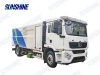
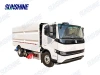
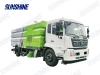
New Energy Road Maintenance Vehicle
.webp)
.webp?x-oss-process=image/resize,w_100/quality,q_100)

.webp?x-oss-process=image/resize,w_100/quality,q_100)
.webp?x-oss-process=image/resize,w_100/quality,q_100)
.webp?x-oss-process=image/resize,w_100/quality,q_100)
.webp?x-oss-process=image/resize,w_100/quality,q_100)
With the acceleration of urbanization, road maintenance has become a crucial component of urban infrastructure management. Traditional road maintenance vehicles mostly rely on fuel, which poses pollution risks and faces high energy consumption and maintenance costs. In recent years, new energy road maintenance vehicles, as an emerging environmentally friendly equipment, have gradually entered the market and become a major innovation in the road maintenance field. With their environmentally friendly, low energy consumption, and low noise advantages, new energy road maintenance vehicles are gradually replacing traditional fuel vehicles and becoming a vital tool for modern urban construction.
▲Structure and Function
New energy road maintenance vehicles typically consist of a power system, an operating system, and a control system. The power system is typically powered by electricity or hydrogen fuel cells, while the operating system includes functional modules such as sweeping, watering, and crack repair.
Electric Drive System: The most common power source for new energy road maintenance vehicles is a battery pack, which utilizes advanced lithium-ion battery technology and offers advantages such as long range, fast charging, and a long service life. Some models also utilize hydrogen fuel cells, which not only provide long range but also allow for quick recharging, increasing operational efficiency. Operation System: New energy road maintenance vehicles are equipped with a variety of road maintenance tools, such as high-pressure cleaning equipment, water spraying systems, detergent spraying systems, and crack repair devices. These devices can be flexibly adjusted to meet diverse road maintenance needs, fulfilling multiple functions, including cleaning, maintenance, and repair.
Intelligent Control System: New energy road maintenance vehicles are typically equipped with an intelligent control system that is easy to operate and offers features such as automatic navigation, operating parameter adjustment, and fault diagnosis. Wireless remote monitoring allows real-time tracking of the vehicle's operating status, ensuring operational efficiency and safety.
▲Operating Principle
The operating principle of new energy road maintenance vehicles is similar to that of traditional fuel-powered road maintenance vehicles, with the primary difference being the power source. The vehicle is powered by batteries or hydrogen fuel cells, with an electric drive system driving the wheels for road maintenance. During operation, the vehicle uses an attached high-pressure spraying system to clean the road surface, or uses a spraying device to apply water and salt, and performs crack repairs as necessary. Hydraulic or electric systems within the vehicle drive various operating components, effectively improving operational efficiency.
The use of new energy drive systems not only ensures high efficiency during operational tasks but also effectively reduces emissions and environmental pollution.
▲Advantages and Features
Environmentally Friendly
New energy road maintenance vehicles are powered by electricity or hydrogen, producing virtually no exhaust emissions during operation. Compared to traditional diesel or gasoline-powered road maintenance vehicles, they can significantly reduce air pollution and help cities achieve their green development goals.
Low Noise
The electric drive system produces low operating noise, making it particularly suitable for operations in densely populated urban areas and at night. Compared to traditional internal combustion engine-powered vehicles, new energy maintenance vehicles reduce noise pollution and disrupt residents' lives.
Low Energy Consumption and Low Maintenance Costs
Compared to traditional fuel vehicles, new energy road maintenance vehicles offer higher energy efficiency, lower operating costs due to their electric drive, and longer maintenance cycles and lower repair costs due to their electric systems. In the long term, new energy road maintenance vehicles offer better economic benefits.
Flexibility and Intelligence
New energy road maintenance vehicles not only possess the functions of traditional maintenance vehicles but are also typically equipped with intelligent control systems, enabling flexible adjustments based on actual needs. For example, the onboard intelligent control system can adjust the vehicle's operating mode in real time to optimize operating efficiency. Furthermore, some models support remote control and monitoring, enhancing operational convenience and safety.
▲Application Scenarios
New energy road maintenance vehicles are primarily used for routine maintenance, cleaning, and repair work on urban roads. They are suitable for cleaning and maintaining urban streets, highways, urban tunnels, squares, parks, and other locations.
Urban Street Maintenance: New energy road maintenance vehicles are suitable for sweeping, watering, and dust removal on densely populated urban roads. This not only improves operational efficiency but also effectively reduces exhaust emissions and noise pollution.
Highway Maintenance: New energy hydrogen fuel cell maintenance vehicles are capable of performing large-scale road inspections, cleaning, and small-scale repairs on highways. The range advantage of hydrogen fuel cell vehicles is particularly evident during long driving periods.
Large locations such as airports and ports: These locations often require efficient cleaning and road maintenance. New energy road maintenance vehicles are widely used in these locations due to their environmentally friendly, efficient, and low-maintenance features.
▲Future Development Trends
With increasingly stringent environmental regulations and the continuous advancement of new energy vehicle technology, new energy road maintenance vehicles will be more widely used in the future. With the further development of battery technology, the range and charging speed of new energy road maintenance vehicles will continue to increase, and hydrogen fuel cell vehicles will also become more convenient to refuel. At the same time, the introduction of autonomous driving technology has the potential to enable new energy road maintenance vehicles to operate in a more intelligent manner, reducing manual intervention and improving efficiency and safety.
▲Conclusion
With their environmentally friendly, low-energy consumption, and low-noise characteristics, new energy road maintenance vehicles are gradually replacing traditional fuel-powered vehicles and becoming the primary choice for modern urban road maintenance. With continuous technological advancements, the application scope and operational efficiency of these vehicles will further expand, making greater contributions to urban sustainable development and environmental protection.
▲Company Introduction

Zhongke Shangsheng New Energy Vehicle Co., Ltd. specializes in the research and development and production of various new energy sanitation vehicles, including new energy garbage trucks, new energy sweepers, restaurant kitchen trucks, road sweepers, cleaning vehicles, water sprinklers, and dust suppression vehicles. The company currently operates a Yancheng R&D and processing plant and maintains long-standing partnerships with large and medium-sized sanitation companies, universities, and research institutes both domestically and internationally. The company has signed a long-term technical cooperation agreement with the Shanghai Branch of the Chinese Academy of Sciences, providing technical services and support regarding policies, regulations, standards, and market requirements, and jointly developing new technologies and processes for special-purpose vehicle modification. Focusing on the R&D direction of "electrification, intelligence, and connectivity," the company is focusing on new energy product development, product cost reduction, and the development of intelligent vehicle networking systems for sanitation equipment. The company is currently developing a small unmanned sweeper that incorporates intelligent obstacle avoidance, facial recognition assisted driving, and intelligent traffic light start-stop technology. The company has relocated part of its production and technical teams to Suizhou, establishing a standardized assembly line and implementing tooling-based production within the industrial park. The company assembles and manufactures various sanitation vehicles, with an annual production capacity of 800 units. To date, the company has 125 employees, including 92 front-line production personnel, and its output value in 2021 was 200 million yuan.
▲Industry Applications

▲Factory appearance

▲FAQ
Q. What applications are new energy road maintenance vehicles suitable for?
A. New energy road maintenance vehicles are widely used in the following scenarios:
Urban street sweeping: Suitable for routine sweeping, watering, and garbage removal tasks within cities, reducing pollution and improving road cleanliness.
Highway maintenance: Hydrogen fuel cell road maintenance vehicles are suitable for long-distance highway maintenance work and have a long driving range.
Rural road maintenance: Suitable for sweeping, repairing, and other maintenance operations on rural roads, especially in areas with high environmental protection requirements.
Special locations such as airports and ports: New energy road maintenance vehicles can be used for cleaning and maintenance in special locations such as airports and ports, meeting high efficiency and environmental protection requirements.
Q. What types of new energy road maintenance vehicles are there?
A. New energy road maintenance vehicles can generally be categorized into the following types based on their functions and usage scenarios:
New energy road sweepers: Used to clean road surfaces and remove debris and dust.
New energy water sprinklers: Used to spray water to reduce dust and apply detergents.
New energy cold patching vehicles: Used for cold patching and repairing damaged pavement.
New energy road inspection vehicles: Used to inspect road surface quality, such as potholes and cracks.
Q. Are new energy road maintenance vehicles adaptable to various weather conditions and road conditions?
A. New energy road maintenance vehicles are generally highly adaptable and can operate in a wide range of climates and road conditions. Their drive systems, suspension systems, and operational control systems are optimized to ensure normal operation in extreme weather conditions, including high and low temperatures, rain, and snow. They also possess excellent gradeability and pothole-crossing capabilities, making them suitable for diverse operating environments, from urban roads to highways.



Contact US
Product Information
Quantity
Unit
Piece
Support order samples, customization, wholesale direct, and complete payment. If the product you look for does not have corresponding customized content, pls fill out the form below to contact us, and we will reply ASAP.